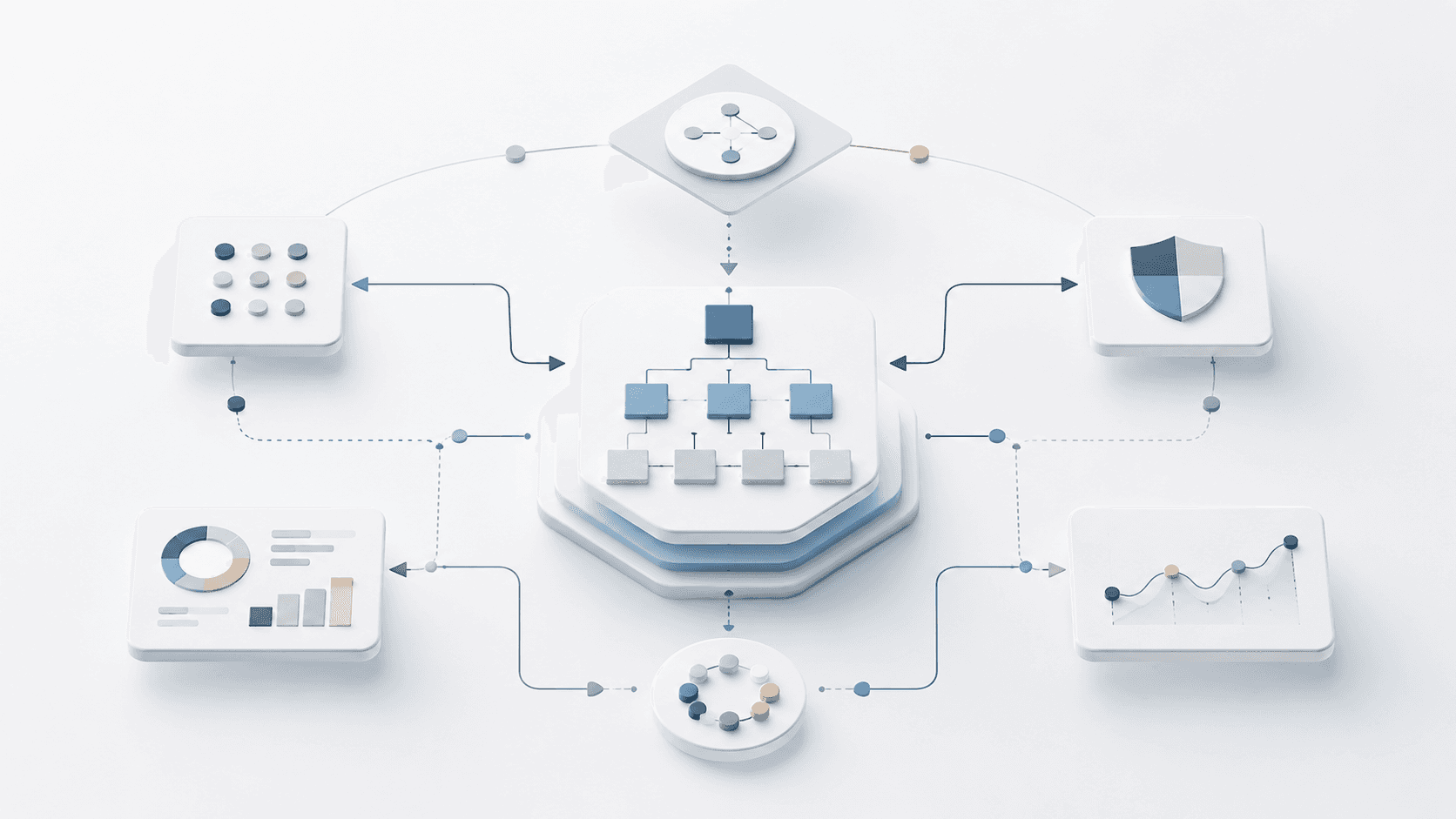
Organizational performance design is the work of arranging how your organization is structured, staffed, rewarded and governed so that it can deliver what your strategy asks of it. It looks at the whole picture — the pressures you face, the strategy you have chosen, how the organization is built, how people actually behave, and the results you are getting — and treats them as one connected system rather than separate management problems.
Why It Matters
When results fall short, the usual response is to restructure. New boxes, new titles, new reporting lines — and six months later, the same behaviour under different names.
That happens because the organization chart is only one part of the design. How work is divided, who has the authority to decide, what actually gets rewarded, and what information reaches whom all shape behaviour more powerfully than reporting lines do. Change one and leave the rest, and the rest quietly pulls everything back. Real change means addressing all of them together — while protecting what your organization already does well.
What We Offer
We assess how your organization currently works and why it produces the results it does — including an independent, on-site view of how people actually behave, not just how they describe themselves. We then redesign the parts driving the gap, help you put the changes in place, and set up the routine that keeps performance visible afterwards. The aim is an organization that can eventually spot its own drift and correct it without us.
How We Help
Step 1: Diagnose & Redesign
A clear, evidence-based answer to why your organization produces its current results
Agreed measures showing exactly where performance falls short of what is needed
An honest view of the behaviours helping and hurting you, from independent observation
A redesign proposal covering everything that shapes those behaviours
Step 2: Deploy & Stabilize
Clear responsibilities and decision rights, so work stops falling between roles
A practical implementation plan with named owners and real dates
A communication plan that brings people with you rather than announcing at them
A regular review rhythm that keeps performance visible at every level
Step 3: Certify & Formalize
Handover of the plan and its ownership to your own leadership team
A balanced set of measures covering output, cost, quality, delivery, safety and people
Checkpoints at 30, 60 and 90 days to make sure the change holds
Your managers trained and confident to run this themselves next time
What We Redesign
Area | What we change |
The work itself | How tasks are divided, and who owns each process from end to end |
The structure | Reporting lines, team sizes, and how departments connect at the handovers |
The people | The skills each role needs, and how people are selected, developed and promoted |
The rewards | What actually gets recognised, so it matches what the business needs |
The decisions | Who decides what, at which level, and how issues get escalated |
The information | What gets measured, who sees it, and how quickly it reaches them |
How We Work
A typical engagement runs eighteen to twenty weeks, in six stages, from agreeing scope through to handing the plan to your own team.
It can begin with the diagnostic phase only. You receive the findings and a prioritized roadmap before deciding whether to continue.
Frameworks & Standards Supported
Proven models: Open Systems Theory and the Organization Performance Model, applied through a structured redesign method used in industrial transformation programmes
Management system standards: ISO 9001 (leadership, roles and responsibilities), ISO 30414 (workforce reporting)
Saudi national frameworks: HRDF, TVTC, Qiyas, and Vision 2030 human capability alignment
How This Differs from Operational Excellence
Operational Excellence improves how work flows — the processes, the quality, the delays, the losses.
Organizational Performance Design changes how the organization is arranged — how work is divided, who decides what, what gets rewarded, and what information reaches whom.
If your processes are sound but results still disappoint, the design is usually the reason.